
Online Reputation Management: Using SEO to Defend Your Online Brand & Reputation
 Samuel Edwards
The internet has the potential to make or break your online brand, and your online reputation management efforts determine whether that impact is positive or negative.
With the advent of social media platforms, it has become even easier to strengthen—or unintentionally damage—your digital presence and positive online image.
That’s exactly why online reputation management services and specialized online reputation management companies have grown into a critical segment of modern public relations. Your online footprint can be volatile, and without a proactive strategy, you may miss negative comments, emerging issues, or shifting customer sentiment that can affect your brand’s reputation.
Do something awesome, and you’re liable to get liked, shared, reviewed, and followed by thousands of fans overnight.
But if you do something off-putting?
Boom!
Down goes your carefully constructed positive online reputation.
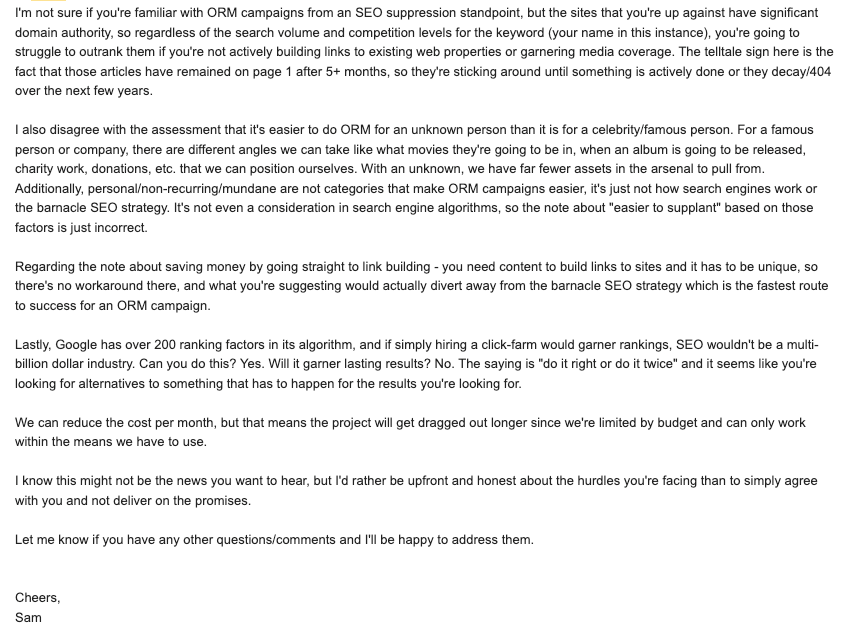
To illustrate the point, here’s a recent inquiry from someone searching for online reputation management services—showing how complex, nuanced, and sometimes expensive a strong reputation strategy can be:
If you think your online reputation is doing all right, you might be correct. But you might not.
Many businesses think their business online reputation is fine. But surface-level scans rarely reveal the complete picture. Google search results beyond page one can contain negative articles, negative reviews, or unwanted content that may damage customer trust.
In this guide, we explore why online reputation management matters and the SEO-based actions you can take to maintain a positive reputation and long-term business growth.
The Importance of Online Reputation Management
Online reputation management encompasses a wide range of strategies—from monitoring brand mentions to building authoritative content—and this table distills those efforts into a clear, actionable framework. Below, you’ll find a comprehensive breakdown of the core components that shape an effective ORM program, including both foundational practices discussed in this guide and additional best-in-class tactics used by leading brands. Use this table as a quick-reference roadmap to understand what each action entails, why it matters, and how it contributes to a stronger, more resilient online presence.
Category Action / Practice Purpose / Benefit Monitoring & Listening Set up alerts (e.g., Google Alerts) for brand mentions, review sites, forums. :contentReference{index=3} Catch emerging issues, negative content or opportunities before they escalate. Review & Feedback Management Respond to negative reviews; correct factual errors; turn dissatisfied customers into promoters. :contentReference{index=4} Protect trust, prevent reputational damage, enhance conversion & loyalty. Positive Content Creation Set up a blog, guest-blog, publish helpful content and case studies. :contentReference{index=5} Build authority, improve search results, push down negative mentions. Directory & Review Site Listing Get listed on relevant review directories, encourage genuine reviews. :contentReference{index=6} Increase visibility, social proof, credibility in search results. Video & Social Presence Produce branded video content (e.g., on YouTube), engage on forums, social profiles. :contentReference{index=8} Dominate search results (YouTube counts), control narrative, engage audience directly. Crisis / Negative Content Response Address negative content swiftly (blogs, PR, SEO) and seek removal/correction if possible. :contentReference{index=9} Reduce impact of damaging content and protect brand reputation. SEO Support for ORM Optimize positive content, build links, work on search engine visibility to outrank negative items. :contentReference{index=10} Ensure favorable content surfaces first in search results, shaping first impressions. Proactive Reputation Building Encourage reviews before issues arise, build loyal community, craft brand story. :contentReference{index=11} Creates a reputation “buffer” so negative events have less relative impact. Measurement & Continuous Improvement Track sentiment trends, review score distributions, search result changes, adjust strategy. :contentReference{index=12} Ensures ORM isn’t a one-time effort but an ongoing strategic process. Privacy & Data Control Manage personal or executive digital footprint, lock down private info, audit public profiles. :contentReference{index=13} Reduces risk of personal vulnerabilities being exploited into reputational incidents.
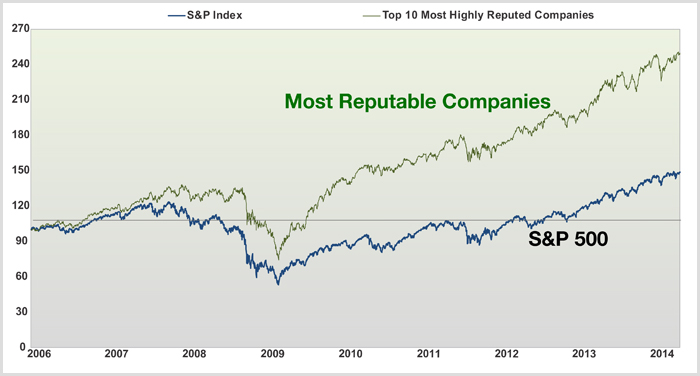
Let’s break down why online reputation management is so important. These may seem obvious, but each one plays a significant role in shaping public perception and ensuring business growth.
1. Visibility
A strong online reputation can generate media mentions, interviews, reviews, and authority sites linking to you. Poor visibility can bury your brand behind negative content or outdated information. Improving your search engine results increases organic visibility and helps drive revenue.
2. Trust & Authority
Every brand has an online reputation — even if it’s unmanaged. Consumers compare companies based on customer feedback, brand history, and perceived credibility. Customer relationships and customer sentiment directly influence trust.
3. Higher Conversion Rates
Research shows:
- 92% hesitate to trust businesses with fewer than 4 stars.
- 84% trust online reviews like personal recommendations.
- Negative feedback on page one can cause a brand to lose up to 22–59% of potential customers.
In short, online reviews heavily impact conversion rate optimization, based on type.
4. Customer Loyalty
Negative press can erode loyalty. Three or more negative articles on page one are often enough to scare away most buyers. Effective review management helps maintain customer trust and satisfaction.
5. More Opportunities
A positive digital presence increases opportunities for partnerships, collaborations, and media exposure.
In fact, 97% of companies consider online reputation management important, ranking it above social media marketing. If you’re not actively managing your reputation, you’re falling behind brands that are.
Paying Close Attention Saves the Day
Monitoring your online presence means looking beyond the noise and paying attention to various platforms, including forums, blogs, news outlets, social media channels, and review sites.
Your success online depends on how well you optimize for the terms your customers associate with your brand. But it's equally vital to respond quickly to negative feedback, misinformation, or reviews that could mislead potential customers.
As the digital world expands, new fields—like specialized reputation management services—continue to emerge. These services help brands address negative search engine results, ensure accuracy, and maintain a positive online reputation.
Managing Negative Reviews Online
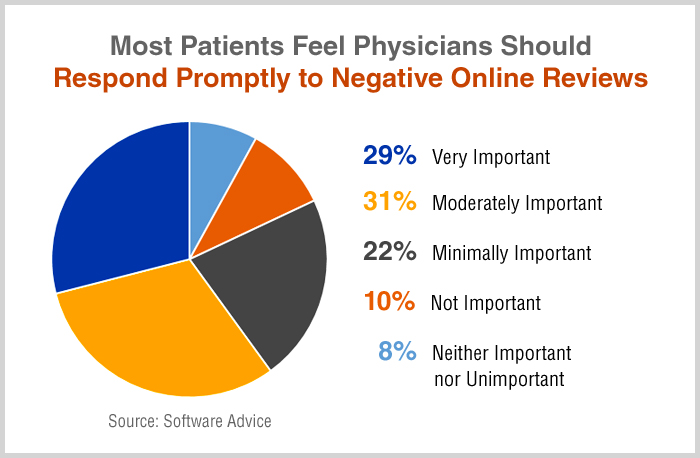
Your first step when dealing with negative reviews is to fix the underlying issue. When a dissatisfied customer becomes a satisfied client, they may remove the review or post positive content.
If the information is incorrect, correcting it publicly can help rebuild customer trust.
Sometimes, legal action or editorial requests can remove defamatory or false information. Other times, strengthening your presence on authority sites, social profiles, videos, and review sites helps drown out the negativity by creating a balanced, authoritative online footprint.
Press releases, content creation, interviews, and positive reviews can all help shift consumer perception.
Astroturfing – The Art of Masquerading
Fake reviews, fake bloggers, and competitor-planted content have introduced new challenges to review management and online reputation management.
“Astroturfing” mimics real grassroots sentiment but is funded or organized behind the scenes. It creates:
- False positive reviews
- False negative reviews
- Fake content designed to manipulate consumer sentiment
Competitors may even attempt strong-arm tactics or spam-based harassment.
Because of this, brands must maintain ethical guidelines and rely on authentic, truth-based content creation and public relations.
8 Tips for Effective Online Reputation Management
Your online reputation is both an art and a science. Here are eight practical methods for strengthening your positive online reputation and protecting your brand online.
1. Ask for Positive Feedback & Reviews
Encourage customer feedback and highlight satisfied clients across platforms. This generates a steady stream of positive reviews and bolsters your brand online.
2. Set Up a Blog
Use your blog for:
- Creating positive content
- Publishing case studies
- Addressing pain points
- Building a competitive advantage
Regular, relevant posts boost SEO, increase authority, and help shape your story.
3. Find Guest Blogging Opportunities
Guest blogs on authority sites increase:
- Brand visibility
- Backlinks
- Trust signals
- Search rankings
Look for contributor opportunities that align with your niche to build a diverse clientele of readers.
4. Get Listed in Directories & Review Sites
Listings on review sites like Yelp, Google, and industry directories give new visitors valuable insights and provide business intelligence into what customers really think.
5. Hustle for the Brand’s Reputation
Use traditional public relations, interviews, content promotion, and link building to strengthen your brand’s reputation.
Consistent exposure across news outlets, blogs, and social media channels helps your brand stay ahead.
6. Manage Your Online Reputation on YouTube
YouTube is the world’s second-largest search engine. Optimize your profile and upload branded videos to control your business name narrative.
7. Be Active on Public Forums
Engage authentically in communities and respond quickly to issues. This grassroots approach builds trust and can counteract negative comments and unwanted content.
8. Set Up Alerts to Monitor Brand Mentions
Tools that offer real-time alerts help you:
- Track brand mentions
- Identify trends
- Respond quickly
- Maintain a unified view of your reputation
- Strengthen reputation monitoring
The Growing Influence of AI on Online Reputation Management
Artificial intelligence tools like ChatGPT, Claude, Perplexity.ai, and Google’s Gemini are reshaping how people discover, evaluate, and interpret information about brands online. Instead of relying solely on traditional search engines, consumers increasingly consult AI assistants that summarize reputational signals—reviews, press coverage, social media mentions, and authoritative sources—into a single answer. This means that your brand’s online reputation, both positive and negative, can be amplified instantly through AI-generated responses.
Each AI system influences reputation in different ways. ChatGPT and Claude rely heavily on historical data and widely trusted sources, meaning the narratives they produce typically reflect the accumulated sentiment about a brand. Perplexity.ai, on the other hand, performs live web searches, often pulling in the most recent content—including news articles, review site updates, and trending conversations—which makes it especially sensitive to new negative mentions. Meanwhile, Google Gemini is directly integrated into Google Search, allowing its AI Overviews to shape the first impression users receive before they even click a result.
Because these AI tools increasingly act as “reputation gateways,” brands must ensure accurate, positive, and up-to-date content exists across the web. High-authority backlinks, strong reviews, consistent messaging, and well-optimized content help AI systems form a favorable narrative about your business. As AI becomes the primary interface for online discovery, online reputation management is no longer just about ranking well in search—it’s about influencing the story AI tells on your behalf.
Online Reputation Management Tools
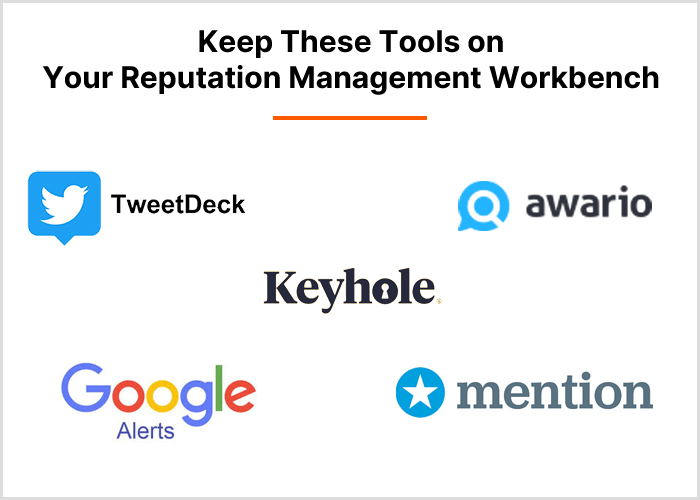
These days, it’s impossible to ignore the enormous opportunities that social media has to offer. It has served as a medium for businesses to promote their products and services, and customers are largely choosing it as their most preferred tool for airing their complaints. You can program Twitter and Facebook, two of today’s leading social tools, to track mentions about your business. You can also use these sites to track mentions about your competitors and study what the public is saying about them. By using social media to track mentions of your business, you can respond to consumer concerns immediately, show your appreciation for any positive comments, and defuse threatening discussions that could potentially destroy your entire online presence. When you’re proactive in this way, and you maintain a high profile across the web, this shows potential customers that you stay fully aware of any issues relating to your business, and that you are always ready to resolve them with people in a quick and timely manner. But which tools should you be using? Here are five of our favorites:
- Google Alerts. Google Alerts is a marvelous online tool that enables you to zero in on any topic or news area you want. It’s highly customizable, so you can set an alert for any topic that interests you, including yourself or your company. The alerts are sent to your email at whatever frequency you prefer. One of the great things about Google Alerts is that you receive alerts on the freshest news or commentaries that are published on whatever topic(s) you register to be alerted on. This includes mentions of your brand!
- Awario. Awario is an excellent tool for tracking mentions - positive, negative, or indifferent - across social platforms like Twitter, Facebook, Reddit, YouTube, and Instagram. You can also use it to listen in on mentions across the internet, including blogs, forums, and news websites.
- TweetDeck. If Twitter is a big part of your brand and you generate a lot of visibility on the platform, you might want a dedicated tool for managing your Twitter presence and online reputation. TweetDeck is the official Twitter dashboard tool, and it’s surprisingly functional. You can search based on positive keywords, negative keywords, dates, mentions, etc.
- Mention. This a social media/web monitoring tool that’s focused on real-time search and alerts. When you set up an alert, it’ll give you all results from the previous 24 hours. And if you pay for certain custom plans, you can get historical data upon request. The tool also doubles as a good research tool if you want to find social media influencers based on certain keywords and niches.
- Keyhole. This is another two-in one tool that lets you monitor social media posts and keywords, as well as track brand mentions and links across other blogs and news sites. With some of the advanced (paid) plans, you can even access things like historical mentions and information on influencers.
You won’t need to use all of these tools - many of them offer the same features and capabilities - but you should be able to find one or two that naturally integrate into your workflow. (Most have some sort of free option and/or trial that allows you to use it risk-free.)
Enhance Your Brand’s Authority With SEO.co
At SEO.co, we give brands the fuel they need to build authority and cultivate positive online reputations that precede them in the sales process.
At SEO.co, we help businesses strengthen their online reputation through:
- High-authority backlinks
- Brand mentions
- Press releases
- Managed online reputation management services
- Strategic content designed to improve visibility
Want to scale your organic traffic with high quality links, prominent brand mentions, and positive PR pieces that allow you to reach the right customers at the right time? As the premier online reputation management company, we've got you covered.
Contact us today to learn more about how we can help you with our fully managed SEO services to take your business to the next level!